


When the Bins Finally Broke: Burnout, Survival Mode, and Coming Back to Yourself
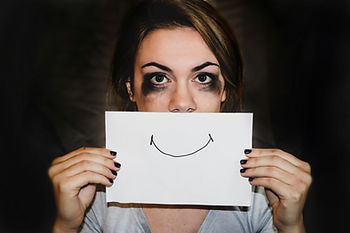
There’s a very specific kind of exhaustion that doesn’t just live in your calendar. It lives in your chest. In your jaw. In the way your shoulders stay lifted like they’re bracing for impact.
In my most recent episode of Just Call Me Viv, I sat down with Katelyn Skerry Notice, a longtime educator, yoga teacher, and the founder of Whole Expansion Inc., to talk about burnout, reinvention, and what it really means to regulate your nervous system (not just hashtag it).
And honestly? This conversation felt like a deep exhale.
The moment she knew: broken rulers and a classroom floor
Katelyn shared a story that I haven’t stopped thinking about.
It was post-lockdown, still masked, still disconnected, still trying to teach kids who were struggling and teachers who were carrying the invisible weight of it all. One day, she was going to teach a geometry lesson, and she went to her beautifully organized classroom bin systems, which she had built with care, because structure can be love.
And she found the rulers snapped in half.
Something about that broke her open. She dropped the bin, slid to the floor, and cried in a way that wasn’t polite or quiet or “I’ll be fine in five minutes.” It was her body saying what her mouth had been avoiding:
I can’t live like this anymore.
That moment mattered because it was physical. Burnout isn’t just an idea. It’s a nervous system that’s been asked to survive for too long.
“I didn’t even respond to my own name.”
There’s a line Katelyn said that landed in my gut.
She talked about identity, how she had been “Skerry” for so long (coach, teacher, the one who holds it all together) that when someone called her by her first name, she didn’t even respond. Her identity was wrapped so tightly around being needed that she couldn’t hear herself anymore.
If you’re an educator, a caregiver, a helper, a “high-functioning” woman who can do ten things at once… You probably know exactly what she meant.
Sometimes we don’t lose ourselves in one dramatic moment. We lose ourselves one day at a time.
What survival mode looks like (and why it’s not a personality trait)
We talked about survival patterns, fight, flight, freeze, and fawn, and how they show up in real life:
Fight: irritability, defensiveness, snapping at people you love
Flight: overworking, staying busy, constant “I’ll rest later” energy
Freeze: shutdown, procrastination, numb scrolling, feeling stuck
Fawn: people-pleasing, over-explaining, making yourself small to keep peace
Katelyn pointed out something important: students and adults are doing this together in the same building, in close quarters, mirroring each other’s dysregulation all day long.
And then we wonder why everyone feels “off.”
Yoga didn’t just help her move. It helped her feel.
Katelyn’s turning point started with one friend basically dragging her to a yoga class (bless friends who do that).
She described lying in Savasana and realizing her mind was quiet and blank for the first time in her memory. Not because she forced it. Because her body finally felt safe enough to let go.
And she said something else I loved: she didn’t just feel lighter like she’d “worked out.”
She felt lighter, like she’d released ten pounds of tension.
That distinction matters.
Because a lot of us already “move our bodies,” but we do it with force energy: Be better. Be smaller. Be stronger. Go harder.
Yoga offered her something different: presence. Permission. A way back to herself.
One of my favorite takeaways: “Wake up for yourself.”
When I asked what someone in survival mode could do to create safety, Katelyn didn’t offer a 27-step routine.
She said: Change your morning.
Set an intention. Give yourself time. And most of all
Wake up for yourself.
Not for work. Not to serve everyone else. Not to immediately become the fixer, the manager, the caretaker.
Wake up because you’re alive. Because this is your life.
That hit me, because I’ve lived the other way. I’ve woken up already behind. Already responsible. Already bracing.
And if you’ve ever hit a wall emotionally or physically, you know the truth:
Your body will eventually force a change that your mind keeps postponing.
Flow-based living: the rhythm is the medicine
Katelyn talked about “flow-based living” as nervous system awareness in real time, recognizing when you’re activated and re-regulating before you push through, perform, or spiral.
Sometimes that looks dramatic at first: stepping away, sitting in a bathroom stall breathing, doing a three-minute meditation with your phone.
But over time, it becomes subtle: a hand on your heart. A few slow breaths. A quiet return to your own center.
She said something I keep repeating in my head:
Rhythm is health.
Your breath has a rhythm. Your heart has a rhythm. Nature has a rhythm. And when we force ourselves out of rhythm long enough, the body keeps receipts.
Education, boxes, and why this generation gives her hope
We also went there: what the education system gets wrong.
Katelyn said schools too often miss the truth that humans live from the inside out, not the outside in. We sort kids into categories, reward compliance, and call it “success.”
But what gives her hope?
Their resistance.
This generation is asking better questions. They’re looking at the “do everything right” path and saying, “And then what? What does this guarantee me?”
And the honest answer is… nothing.
A transcript can be stellar, and a soul can still be lost.
The gritty version of self-love (not the aesthetic version)
One of my favorite parts of the conversation was when we talked about self-love on the rough days.
Katelyn said it plainly: self-love is often uncomfortable.
It’s leaving early. Disappointing people. Saying no. Choosing yourself when your brain screams, “Stay safe, stay liked, stay small.”
She also shared a re-parenting exercise she does with students: imagine a child you love more than anything, what would you want for them?
Sleep. Nourishment. Fresh air. Community. Boundaries. Movement. Support.
And then the mic-drop truth:
You’re already responsible for a human life. It’s yours.
Alcohol, numbing, and the cost of “normal.”
Katelyn also spoke candidly about choosing a substance-free life and how alcohol can become a socially acceptable coping mechanism, especially in high-stress helping professions.
She explained it in a way I found powerful: when we numb emotions meant to move us, we freeze them. We make them heavier. We store them.
And eventually, that weight shows up as anxiety, depression, disconnection, exhaustion, and feeling like you can’t even recognize yourself.
If you’re feeling stuck, start small (but start)
At the end, I asked what she’d tell someone who feels stuck and not brave enough to change.
Her answer was simple and steady:
Pick one action. Commit to it. Stay consistent. Notice what it changes in you.
If she could choose for you, she’d take you to a yoga class. Not because you need another task.But because you deserve a way back home.
If something in this conversation landed for you, if you’ve been carrying too much, too quietly, share this episode with a friend who needs a soft place to land. And if you want more conversations like this, make sure you’re subscribed.
Until next time: take care of yourself like you’re someone you love.
—Viv
Catch the full episode with Katelyn here:https://youtu.be/oC0yC0oIymI


Thank you so much for this. I really needed a reminder to recenter and prioritize me.